Get an Industrial License in Dubai, UAE
Start manufacturing, production, or assembly operations legally in the UAE with 100% foreign ownership options.
Reviews
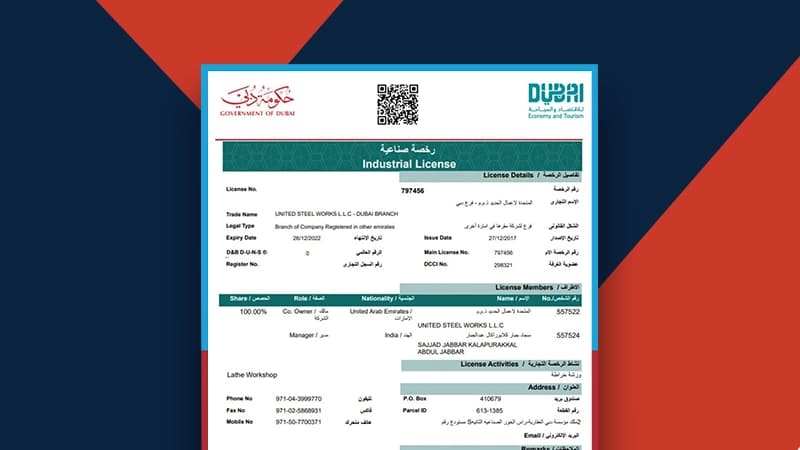
Start manufacturing, production, or assembly operations legally in the UAE with 100% foreign ownership options.
Reviews
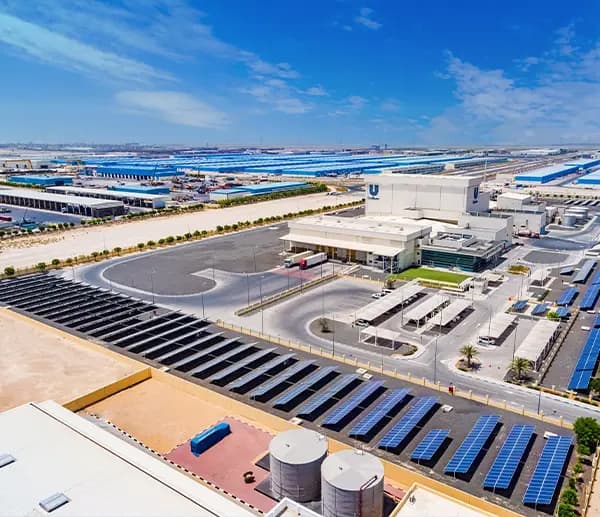
Dubai is a rapidly growing industrial hub, strategically located between Asia, Europe, and Africa. Its advanced infrastructure, free zones, and business-friendly regulations create a strong environment for industrial company formation in the UAE.
At Shuraa, we streamline the process of obtaining an industrial license in Dubai, covering feasibility studies, government approvals, factory setup, visas, and banking. Our transparent pricing and expert guidance help ensure your business launch is efficient and compliant.
An Industrial Manufacturing License in Dubai is a required permit for businesses involved in producing, processing, or assembling goods. Issued by the Dubai Department of Economy and Tourism (DET) or the relevant Free Zone authority, it authorises companies to convert raw materials or natural resources into semi-finished or finished products.
Any business that turns raw materials into finished products must have an industrial manufacturing license. This license helps companies follow safety, environmental, and labour rules. It also lets them import materials without paying duty, work in industrial zones, and sell products locally and internationally.
Manufacturing, assembling, or processing goods in the UAE requires a license by law. Having this license lets businesses operate legally and avoid heavy penalties.
With this license, businesses can import raw materials and export finished products. Often, they also get customs duty exemptions on materials and machinery.
The license lets businesses rent warehouse space and production facilities in industrial zones like Jafza, which are set up for manufacturing.
The license helps businesses obtain the necessary approvals from Dubai Municipality and the Civil Defence to comply with safety regulations.
Companies can enjoy 0% corporate tax in free zones, VAT exemptions on exports, and the ability to send all profits back to their home country.
The license allows companies to sponsor residence visas for technicians, workers, and managers, which helps keep operations running smoothly.
With this license, businesses can manage their supply chain more efficiently and grow their operations.
Encompasses food and beverages, textiles and clothing, paper, petroleum products, chemicals, plastics, metals, machinery, and equipment.
Includes metal casting, assembling machinery, making automotive parts, and cutting stone.
Involves technologies such as 3D-printed concrete, green hydrogen, and specialised pharmaceutical production.
Include importing raw materials, exporting finished products, and packaging.
Include waste management for manufacturing, repair of specialised industrial equipment, and maintenance.
No.
Document Type
Details
Document Type
Details
You’ll need a completed application form, a Trade Name Reservation Certificate, and an Initial Approval Certificate.
Document Type
Details
Ensure you have passport copies, passport-sized photos, and either Emirates IDs or entry permits for all shareholders and managers.
Document Type
Details
Prepare an approved feasibility study that covers your factory layout, a list of machinery and equipment, and descriptions of your processes.
Document Type
Details
You’ll need a valid lease agreement and a land or warehouse title deed, both approved by the local authorities.
Document Type
Details
Obtain a NOC from Dubai Municipality for your site, and Environmental Clearance and Ministry of Health approvals, if needed.
Document Type
Details
You’ll also need a Memorandum of Association (MOA).
Shuraa can help you every step of the way, from preparing your documents to getting all the industrial license approvals you need.
Getting an industrial license in Dubai or the UAE follows a clear process to make sure you meet all regulations and are ready to operate. This guide explains the main steps to legally set up your manufacturing or production business.
Handling this process by yourself can be complicated. If you work with Shuraa, we take care of everything from initial approvals to final visa steps, making your setup much easier.
The UAE has modern industrial zones that help a wide range of manufacturing, logistics, and industrial businesses. Each zone offers its own benefits, infrastructure, and incentives.
is built for manufacturing and heavy industries. It provides reliable infrastructure and strong logistics connections.
is ideal for large, industrial, export-focused businesses. It offers direct access to the port and strong global trade links.
is a key centre for metals, logistics, food processing, and advanced manufacturing.
focuses on heavy industries, engineering, and high-tech manufacturing.
are affordable zones well-suited for small businesses, light manufacturing, and trading.
is known for flexible licenses, low-cost setup, and strong support for manufacturers.
An industrial license in Dubai usually starts at AED 25,000*. The total cost depends on several important factors specific to your business:
Fees differ for light manufacturing, heavy industry, or specialised production.
Each area has its own fee structure and benefits.
Bigger spaces often mean higher rental and approval costs.
Some activities need extra clearances, which can increase the total cost.
The number of investor and employee visas you need will affect the total cost.
Note: These costs are for reference only. For a clear, accurate quote tailored to your needs, contact Shuraa. We provide custom cost breakdowns with no hidden fees.
Industrial companies in the UAE must comply with regulations and meet requirements to keep their operations running smoothly. Staying on top of compliance makes license renewals easier and helps avoid penalties.
Make sure you provide and keep up-to-date information about your Ultimate Beneficial Owner, as required.
Submit your filings on time for any industrial activities that require them.
Make sure you fully comply with Anti-Money Laundering and Counter-Terrorism Financing standards.
Renew your industrial license before the deadline to avoid fines, restrictions, or suspension of your operations.
Partner with Shuraa for comprehensive management of license renewals, compliance filings, and audit preparations. Our end-to-end service lets you focus on your industrial business with confidence.
For over 26 years, Shuraa has helped manufacturers in the UAE build, grow, and succeed as a trusted partner for industrial ventures.
Take advantage of our deep experience and strong understanding of the UAE’s industrial, legal, and regulatory landscape.
We have helped set up over 100,000 businesses in the UAE, showing our reliability and reach. This includes support for 45-50 industrial company licenses.
You will work directly with our specialised consultants, who guide you through licensing, government approvals, compliance, and operational needs.
We handle every part of the setup process, including feasibility studies, getting licenses, visa processing, renewals, and ongoing compliance, so everything runs smoothly.
Our clear pricing means there are no hidden fees, so you can plan your investment with confidence.
We offer setup solutions designed to fit your production goals and business size.
Start building your industrial future with the UAE's most trusted partner.

Shuraa Business Setup is the highest-rated business setup consultancy in the UAE, providing expert guidance and comprehensive service to help entrepreneurs establish and grow their businesses seamlessly.
Had a great experience with Shuraa?
Your feedback helps other entrepreneurs make the right choice.
An industrial license legally authorises businesses to conduct manufacturing, processing, assembly, or production activities in the UAE.
A Dubai industrial license, regulated by the Ministry of Industry and Advanced Technology (MoIAT) and the Dubai Department of Economy and Tourism (DET), is required for manufacturing, industrial production, or processing activities. Applicants must have an approved physical facility in locations such as Dubai Industrial City or Jebel Ali Free Zone, submit a feasibility study, and typically employ at least 10 staff.
An industrial manufacturing license in Dubai is a mandatory permit issued by the Department of Economy and Tourism (DET) for mainland or by Free Zone Authorities (such as JAFZA). It authorises companies to produce, process, fabricate, and package goods, covering activities from food production to heavy machinery.
To start an industrial company in Dubai, secure an industrial license, obtain approvals from the Department of Economy and Tourism (DET) and Dubai Municipality, and lease or construct a physical factory. For mainland companies, a 51% local sponsor in a few sectors, a detailed business plan, and environmental clearance are required.
The process typically takes 3 to 6 weeks, depending on the complexity of the activity, required approvals, and completeness of documentation.
Yes. The UAE permits 100% foreign ownership for industrial projects in designated free zones and, following recent legislative updates, for eligible mainland activities.
Yes. You can submit industrial trade license applications online through official government portals or accredited service providers.
Costs typically start at around AED 25,000* and vary depending on the industrial activity, location (mainland or free zone), required approvals, and number of visas.
An Industrial License permits the manufacturing of goods. An Industrial Trade License authorises trading, import, and export of industrial or manufactured products, but not their production.
Yes. Securing preliminary approval for a suitable facility, such as a factory or warehouse, is mandatory. Proof of location is required before the final license is issued.
Delays often result from incomplete feasibility studies, pending facility or environmental approvals, or discrepancies in company documentation.
The Department of Economy and Tourism (DET) issues licenses for mainland companies, while each Free Zone Authority manages licensing within its respective zone.
Yes. Failure to renew the license on time, non-compliance with regulations such as ESR or UBO, or violating license terms can result in suspension or cancellation.
Ongoing requirements include annual license renewal, compliance with Economic Substance Regulations (ESR) if applicable, and maintaining accurate UBO and corporate records.
One conversation is all it takes. Connect with our experts for personalised advice on business setup and company formation in Dubai or across the UAE.