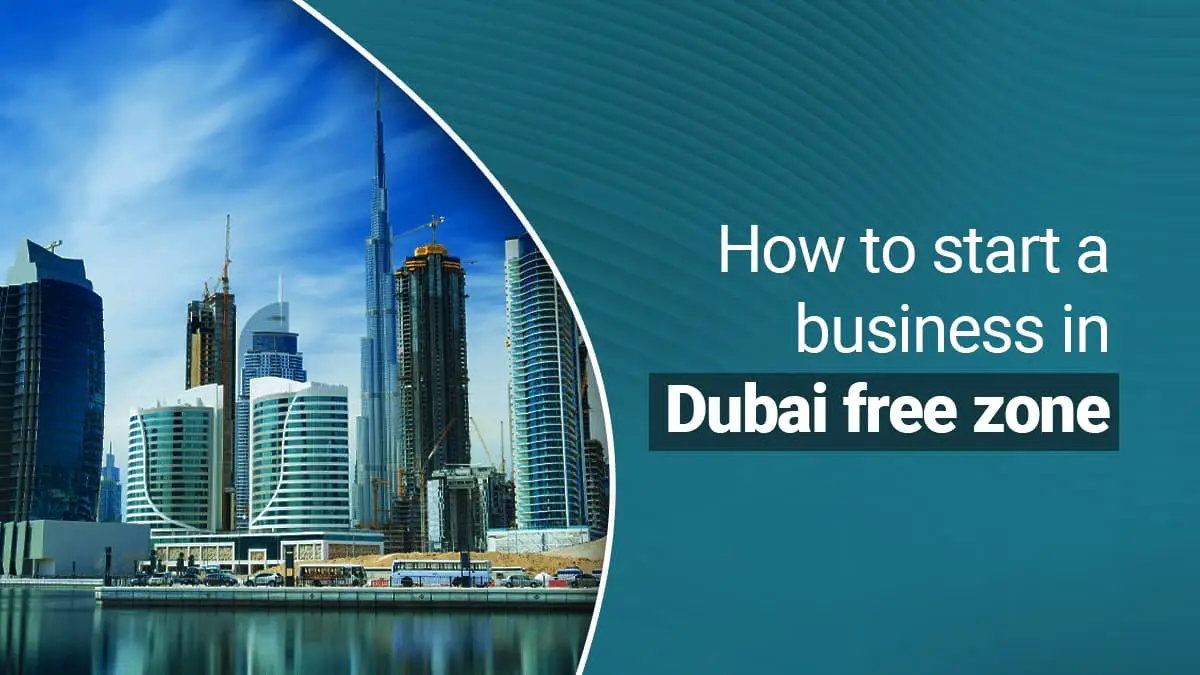
How to Start a Business in Dubai Free Zone: 2026 Guide
Let’s Connect.
Table of Contents
Dubai remains a top global business destination in 2026, with its free zones driving economic growth through incentives like 100% foreign ownership and streamlined processes.
As of January 2026, there are more than 1.4 million active companies operating in the United Arab Emirates (UAE), 46+ free zones, up from previous years, fueled by policies like the new Free Zone Mainland Operating Permit under Dubai Executive Council Decision No. 11 of 2026.
This allows eligible free zone firms to expand onshore without a local sponsor, boosting integration with local markets. Whether you’re a startup founder or an established investor, this guide—based on official UAE sources and recent regulatory updates—provides a clear, step-by-step path to launch your venture. I’ll draw from my experience advising over 100,000 international clients on UAE setups since 2021, ensuring practical, up-to-date insights.
What is a Free Zone Company?
Free zones are designated economic areas in the UAE offering tailored incentives to attract foreign investment. They function as onshore entities, enabling legal operations within Dubai under zone-specific rules, distinct from offshore companies used mainly for international holding or asset protection.
In 2026, free zones host diverse sectors, from tech to logistics, with recent expansions like Sharjah’s COMTECH for communications tech. Key perks include exemptions from import/export duties and, for qualifying firms, 0% corporate tax on eligible income. A major update: Free zone companies can now establish mainland branches via the Department of Economy and Tourism (DET), retaining full ownership without local partners—a shift from prior restrictions.
Popular specialized zones include:
- Dubai Internet City (DIC): Tech and IT innovation.
- Dubai Healthcare City (DHCC): Medical and wellness services.
- Jebel Ali Free Zone (JAFZA): Logistics and manufacturing, with on-dock port access.
- Dubai CommerCity: E-commerce and digital trade.
Even specialized zones often allow flexible add-on activities, supporting hybrid models.
Why Choose Dubai Free Zones in 2026?
Free zones align with Dubai’s D33 agenda to double its economy by 2033, emphasising innovation and FDI. Here’s why they’re ideal for entrepreneurs:
- 100% Foreign Ownership: Full control without local sponsors, now extendable to mainland branches.
- Profit Repatriation: 100% of profits and capital are transferable abroad, with no withholding taxes.
- Tax Advantages: 0% corporate tax on qualifying income (e.g., exports, zone-to-zone trade) if you meet substance requirements like local staffing and assets; 9% on non-qualifying income (e.g., mainland sales exceeding 5% of revenue). Exemptions last up to 50 years in zones like Dubai Silicon Oasis.
- Duty-Free Trade: No customs on imports/exports within zones, ideal for trading firms.
- Strategic Location: Proximity to Dubai International Airport, Jebel Ali Port, and highways for seamless global connectivity.
- Visa and Talent Access: Multi-year visas (up to 10 years for investors) and family sponsorships; diverse expat talent pool.
- Fast Setup: 3-10 days for most registrations, with digital portals.
- Sector Flexibility: From AI in Expo City to fintech in DIFC, with 2025 expansions into green energy and health tech.
Compared to mainland setups, free zones offer lower bureaucracy but limit direct local trading unless using the new permit.
Types of Free Zone Licenses in Dubai
Licenses match your activities; dual options are common for versatility. Main categories in 2026:
- Commercial License: For trading, import/export, and distribution (e.g., general trading in IFZA). The license covers wholesale and retail activities, with a starting price of AED 12,500*.
- Professional License: For services like consulting, IT, or freelancing (e.g., in Dubai Knowledge Park). Credentials are required; this license is perfect for firms that prioritise expertise.
- Industrial License: For manufacturing/assembly (e.g., in JAFZA). This license encompasses warehouse operations and requires regulatory approvals to ensure safety.
- E-Commerce License: For online sales and digital platforms (e.g., in Dubai CommerCity). The license facilitates dropshipping, which is experiencing significant growth due to the 2025 digital trade incentives.
Choose based on your core activities—consult zone lists for approvals.
Step-by-Step Guide: How to Set Up a Business in Dubai’s Free Zone
In my client’s work, the process is efficient but requires precision. Expect 3-10 working days; costs AED 10,000*-50,000*. Here’s the 2026 roadmap:
Step 1: Select the Right Free Zone
Align with your sector, budget, and needs (e.g., visas, facilities). Factors:
- Consider costs and visa options, such as IFZA, which offers low-cost solutions for up to 6 visas.
- Location (e.g., Meydan: near downtown).
- Activities allowed.
Top 2026 picks: IFZA for affordability, DMCC for commodities. Use online tools for comparisons.
Step 2: Define Business Activity and License
Review zone-approved lists (e.g., via the DET portal). Specify core/auxiliary activities to avoid delays. Opt for dual licenses if blending trade/services.
Step 3: Choose Legal Structure
- Free Zone Establishment (FZE): Single shareholder; min. capital AED 1,000 in some zones like DAFZA.
- Free Zone Company (FZC/FZCO): 2+ shareholders (up to 5); flexible governance.
- Branch: For expansions; no new capital needed.
Step 4: Register Trade Name
Use zone portals to verify availability. The rules state that the trade name must reflect the business activities, cannot include offensive terms, and must end with either FZE or FZCO. Approval in 1-2 days.
Step 5: Secure Initial Approval
Submit to zone authority: Application form, passports, business plan, NOC (if visa-sponsored). The process will go digital in 2026 to expedite the process.
Step 6: Lease Office Space
This step is essential for obtaining visas and establishing credibility. Options:
- Flexi-desk: AED 5,000*-15,000*/year (solo starters).
- Private office/warehouse: AED 20,000+.
This has an impact on the visa quota, which is set at one visa per 9 sq. m.
Step 7: Submit Documents and Fees
Final package: MOA/AOA, resolutions, photos, leases, approvals. Pay license/registration fees.
Step 8: Obtain License
The license is issued post-review and is valid for one year, with an annual renewal required. The license is now operational and can be used for hiring, contracting, and banking purposes.
Step 9: Apply for Visas
For owners/employees/dependents: Entry permit, medical test, Emirates ID, and stamping. There are quotas per office, with options to extend for 5-10 years starting in 2026. Process: 5-7 days.
Step 10: Open a Corporate Bank Account
Submit license, passports, lease, and plan. Banks like Emirates NBD approve in 1-2 weeks; regional ones are faster for startups.
For mainland expansion, apply for the new permit via the Invest in Dubai platform.
Documents Required
Core list (varies by zone):
- Passport copies (shareholders/directors).
- Visa/Emirates ID copies.
- Passport photos.
- Application form.
- Business plan.
- Trade name certificate.
- NOC from sponsor.
- Bank reference.
Prepare attested copies; consultants handle notarization.
Cost Breakdown for 2026
Costs vary by zone/activity; basic setup is AED 10,000-20,000. In most cases, there is no minimum capital required, but it is necessary to demonstrate substance for tax benefits.
| Component | Estimated Cost (AED)* | Notes |
|---|---|---|
| License Fee | 12,500-25,000 | Per activity; e.g., IFZA zero-visa: 12,500. |
| Registration | 5,000-10,000 | One-time. |
| Office Lease | 5,000-50,000/year | Flexi vs. full. |
| Visas (per person) | 3,000-5,000 | Includes medical/ID. |
| Bank Setup | 1,000-2,000 | Account opening. |
| Total (Basic) | 10,000-30,000 | Excl. PRO fees (5,000+). |
Cheaper in Ajman/RAKEZ (from AED 5,500*). Annual renewal: 80% of setup.
The listed cost is an estimate. For an exact quote, please use our cost calculator.
Best Practices for Success
- Align the Match Zone with your goals: For technology, use DIC; for budget considerations, refer to IFZA.
- Tax Compliance: Track qualifying vs. non-qualifying income; register with FTA even for 0% rate.
- Budget Holistically: Factor in 6-12 months’ operations; use SBR if revenue is less than AED 3M.
- Leverage Networks: Join zone events; build expat ties.
- Scale Smart: Begin with flexible options, upgrade as needed for growth, and utilise digital tools to ensure compliance.
- Digital Presence: Optimise for UAE SEO; comply with the 2026 ad transparency rules (clear pricing).
Why Choose Shuraa Business Setup?
With 26 years of expertise and over 100,000 clients served worldwide, Shuraa Business Setup stands out as the UAE’s highest-rated consultancy for free zone formations, earning top marks on Google and Trustpilot for seamless, transparent service. Here’s why entrepreneurs trust us to navigate Dubai’s dynamic landscape:
- Proven Track Record: We’ve facilitated setups for 100,000+ companies across zones like IFZA, DMCC, and JAFZA, including visa processing, banking, and compliance—delivering results in as little as 3 days.
- End-to-End Expertise: From initial approvals and custom licensing to Golden Visas, PRO services, and auditing, our multilingual team (180+ professionals across 17+ nationalities) handles everything, ensuring 100% compliance and cost savings up to 20% on packages.
- Client-Centric Support: Dedicated advisors provide personalised guidance, with clients raving about “smooth protocols” for accounts, visas, and setups—calling them “hassle-free” and “like family.”
- Affordable and Scalable Solutions: Tailored for startups and enterprises, we specialise in budget-friendly zones while offering fast-track options via our regulatory networks—no hidden fees, just reliable results.
- Global Accessibility: 20+ languages spoken, with free consultations and responsiveness, making us ideal for international investors eyeing Dubai’s 4-5% GDP growth in 2025.
Are you prepared to embark on this journey? Contact Shuraa at +971 44081900, WhatsApp +971 507775554, or email info@shuraa.com for a no-obligation quote. Let’s build your Dubai success story together.
Conclusion
Launching a business in a Dubai free zone in 2026 positions you at the epicentre of global innovation and trade, leveraging the UAE’s robust incentives like 100% ownership, tax efficiencies, and seamless connectivity to emerging markets.
With over 46 specialised zones hosting more than 150,000 enterprises, the ecosystem is more integrated than ever—thanks to updates like the Free Zone Mainland Operating Permit, which enable onshore expansion without sponsors.
This guide equips you with actionable steps, from zone selection to licensing and compliance, ensuring a swift 3-10 day setup. Remember, success hinges on aligning your venture with Dubai’s D33 vision for economic diversification in tech, green energy, and e-commerce. As regulations evolve, stay proactive with annual renewals and FTA filings to sustain your tax perks.
If you’re ready to transform your idea into a thriving UAE operation, partnering with a trusted consultant can eliminate hurdles and accelerate growth. Dubai isn’t just a destination—it’s a launchpad for exponential success.
Frequently Asked Questions (FAQs)
1. How much does it cost to open a company in Dubai’s free zone?
AED 10,000-50,000 initially, based on zone, license, and visas. Basic packages start at AED 12,500*.
2. How long does it take?
The processing time is 3 to 10 working days, but it will be faster with digital submissions starting in 2026.
3. How to open a corporate account?
Post-license: Submit docs to banks like Mashreq; 1-2 weeks approval.
4. Are free zone companies tax-exempt?
Qualifying income is tax-exempt at 0% if the company complies with regulations, such as having no more than 5% of revenue from mainland sources; otherwise, a 9% tax applies. Register annually with FTA.
5. What is a Dubai Unified License?
The Dubai Unified License facilitates multi-zone operations and government dealings, making it crucial for 2026 expansions.
Disclaimer:This guide reflects 2026 regulations as of January 01; consult the authorities for customised advice. Policies evolve—verify via u.ae or DET.
Leave a Comment
No comments yet. Be the first voice in the void.