Equipment Rental license Dubai: Costs, Legal Requirements & Business Setup Guide UAE
Let’s Connect.
Table of Contents
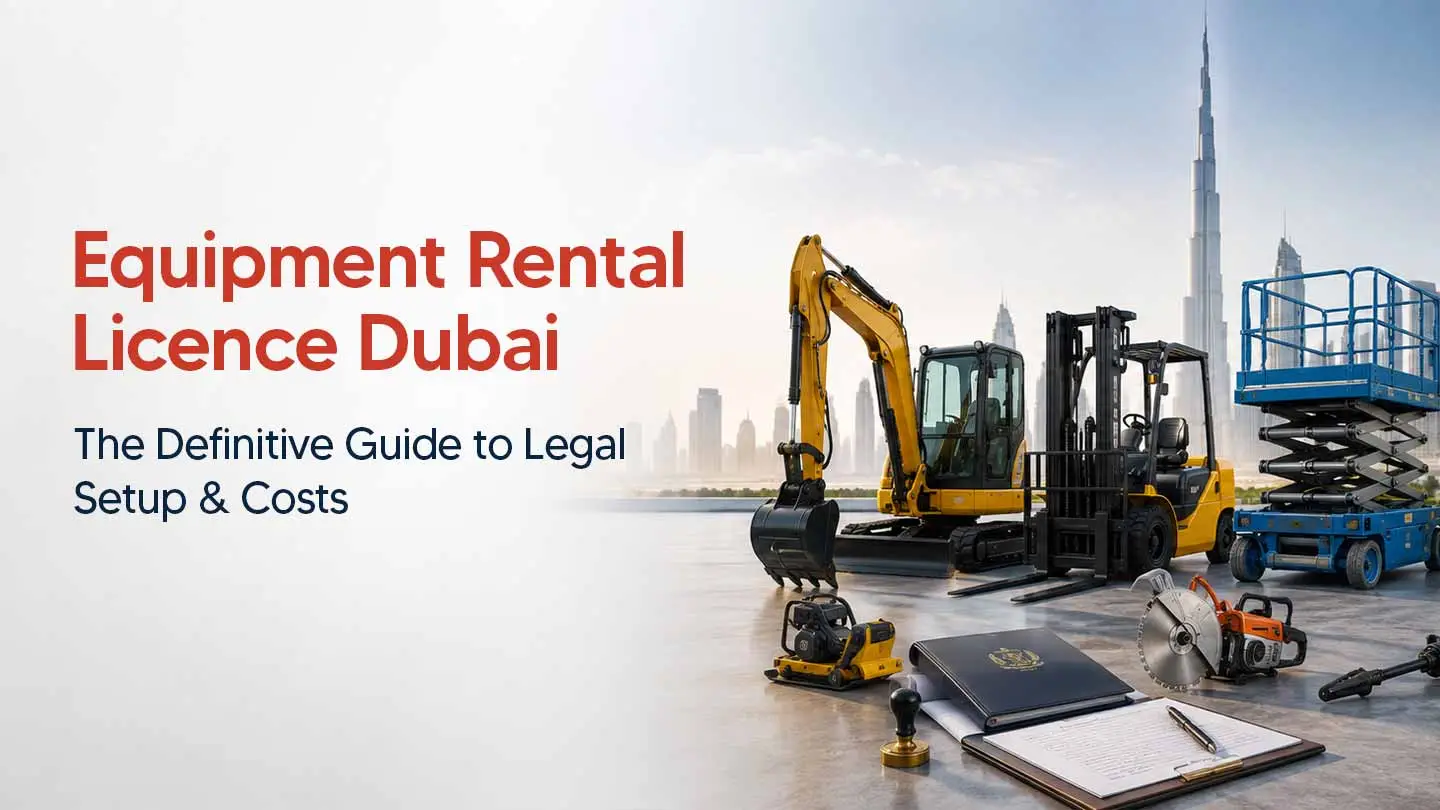
Dubai’s construction and infrastructure sector shows no signs of slowing down. With mega projects like Dubai Urban Tech District, multiple Expo legacy developments, and a relentless commercial real estate pipeline, the demand for construction equipment, industrial machinery, and specialist tools continues to grow year on year.
If you are planning to start an equipment rental business in Dubai, the timing could not be better. But before you put a single crane or compactor to work, you need to get the right licence in place. Operating without one is not just risky – it is illegal.
This guide covers everything you need to know about obtaining an equipment rental licence in Dubai: what it is, which activities it covers, where to set up, what it costs, and how Shuraa Business Setup can help you get there faster.
Equipment Rental License Dubai: A quick Rundown
| Requirement | Details |
| License Type | Commercial |
| Ownership | 100% Foreign Ownership |
| Setup Time | 2–4 Weeks |
| Estimated Cost | AED 40,000–80,000+ |
| VAT | 5% |
| Corporate Tax | 9% Applicable above AED 375,000 |
| Office Required | Yes |
What Is an Equipment Rental License in Dubai?
An equipment rental licence in Dubai is a commercial trade licence that authorises a business to lease, rent, or hire out equipment to third parties. Depending on the activity category you register under, this can cover:
- Construction and heavy machinery (excavators, bulldozers, cranes, compactors)
- Industrial and manufacturing equipment
- Electrical and mechanical tools
- Scaffolding and formwork systems
- Generators, compressors, and lifting equipment
- Surveying, testing, and safety equipment
- Event and entertainment equipment
The licence is issued either by the Department of Economy and Tourism (DET) if you are setting up on the Dubai mainland, or by the relevant free zone authority if you choose a free zone jurisdiction.
Why Start an Equipment Rental Business in Dubai?
Dubai is one of the world’s most active construction markets. The UAE’s Vision 2031 framework, combined with ongoing residential and commercial mega-project pipelines, keeps demand for machinery rental businesses in Dubai consistently high. Here is why entrepreneurs and investors are keen to enter this sector:
1. Booming Construction Pipeline
UAE construction output is projected to grow steadily through 2030, driven by residential development, hospitality, logistics, and infrastructure expansion. Developers consistently need access to equipment without the capital burden of ownership, making rental an essential service.
2. 100% Foreign Ownership Now Available
Since the UAE’s landmark Commercial Companies Law amendment in 2021, most business activities on the Dubai mainland, including equipment rental, allow 100% foreign ownership. You no longer need a UAE national sponsor or local service agent for commercial activities.
3. Strategic Location and Logistics Hub
Dubai’s position as a global logistics hub makes it easy to import, service, and redeploy machinery across the GCC and beyond. Port Jebel Ali, one of the world’s largest ports, and Al Maktoum International Airport provide excellent freight connectivity for large equipment.
4. Tax-Efficient Business Environment
Corporate tax in the UAE is 9% on taxable income exceeding AED 375,000, which is still among the lowest globally. Free zone entities with qualifying income may benefit from 0% corporate tax under specific conditions. There is no personal income tax, and VAT is 5%.
5. Strong Regulatory Framework
Dubai has a well-established legal and regulatory environment. Contracts are enforced reliably, and dispute resolution mechanisms through DIFC Courts or Dubai Courts are efficient. This matters when you are leasing high-value equipment under commercial agreements.
What Activities Does an Equipment Rental License Cover?
The Dubai Department of Economy and Tourism (DET) Activity List uses specific activity codes to define what a business can legally do. For an industrial equipment rental business in the UAE, relevant activities typically include:
| Activity Name | Notes |
| Machinery and Equipment Rental | Core rental activity – heavy machinery, tools, and equipment |
| Construction Equipment Rental | Specifically for cranes, excavators, compactors, and related plant |
| Industrial Equipment Rental | Manufacturing, processing, and factory machinery |
| Scaffolding Rental | Erection, dismantling, and rental of scaffolding systems |
| Generator Rental | Power generation equipment for events, construction, and emergencies |
| Heavy Transport Equipment Rental | Trucks, trailers, and specialist haulage vehicles |
| Tools and Equipment Rental | Smaller tools and site equipment for short-term use |
You can typically register multiple related activities under a single license. Your business consultant will help you select the right combination based on your intended operations.
Mainland vs Free Zone: Which Is Right for Your Equipment Rental Business?
One of the first decisions you will make is whether to set up your equipment rental business on the Dubai mainland or in a free zone. Both have advantages – the right choice depends on your client base and operational model.
Dubai Mainland
A Dubai mainland business license for equipment rental allows you to work directly with clients anywhere in the UAE without restrictions. This is important for a construction equipment rental business, since your clients will typically be contractors and developers operating across Dubai, Abu Dhabi, Sharjah, and beyond.
- Unrestricted access to the local UAE market
- Can bid for government contracts and public-sector projects
- Physical office or yard required in Dubai (suitable for storing heavy equipment)
- Regulated by DET and subject to standard UAE Commercial Companies Law
- 100% foreign ownership permitted for equipment rental activities
Dubai Free Zone
Dubai Free zones are a viable option if you are primarily dealing with foreign clients, operating on a specific project site within the free zone, or want a simpler, faster setup process. Popular free zones for equipment-related businesses include IFZA (International Free Zone Authority), JAFZA (Jebel Ali Free Zone Authority), Dubai South, and RAKEZ.
- 100% foreign ownership and full profit repatriation
- May benefit from 0% corporate tax on qualifying income
- Restrictions on direct trading within the UAE mainland without a distributor or agent
- Suitable for import/export-led equipment businesses or those serving specific free zone clients
How to Get an Equipment Rental License in Dubai: Step-by-Step
Here is how the process typically works when setting up a construction equipment rental business or any equipment rental operation in Dubai:
Step 1: Define Your Business Activity
Confirm the equipment rental activities you want to operate under. The DET maintains a list of approved activities, your consultant will identify the correct activity codes and ensure there are no conflicting or overlapping registrations.
Step 2: Choose Your Legal Structure
Most equipment rental businesses in Dubai are registered as a Limited Liability Company (LLC). An LLC protects personal assets, allows multiple shareholders, and is the most flexible structure for commercial operations. Other options include a Sole Establishment (for single owner-operators) or a Branch of a Foreign Company.
Step 3: Register a Trade Name
While registering a trade name, your company must comply with UAE naming conventions. It should not reference any government bodies, contain offensive language, or conflict with an existing registered business. The DET will check availability and approve your chosen name.
Step 4: Submit Initial Approval Application
Submit your initial approval application to the DET. This includes the trade name, shareholder details, activity codes, and legal structure. At this stage, no commitment has been made, initial approval simply confirms the authority permits this type of business to proceed.
Step 5: Secure a Business Address
You will need a registered office address in Dubai. For an equipment rental business, you will likely also need a yard or warehouse to store and maintain your equipment fleet. Lease agreements must be attested through Ejari (Dubai’s tenancy registration system).
Step 6: Prepare and Attest Documents
Required documents typically include:
- Passport copies of all shareholders and directors
- Visa copy and Emirates ID (if already in the UAE)
- Passport-size photographs
- Memorandum of Association (MoA), drafted and notarised
- Tenancy contract/Ejari certificate
- Initial approval from DET
Step 7: Pay Fees and Receive the License
Once all documents are approved and fees are paid, the DET issues your equipment rental business license. The process typically takes between 2 and 4 weeks for a mainland setup, depending on the completeness of your documents and any additional approvals required.
Step 8: Open a Corporate Bank Account
With your trade license in hand, you can open a corporate bank account in the UAE. Banks will typically ask for your license, MoA, shareholder documents, and a business plan. Popular banks for business accounts include Emirates NBD, Mashreq, ADCB, and RAK Bank.
Equipment Rental License Dubai Cost Breakdown in 2026: What to Budget For
The total cost of getting an equipment rental license in Dubai varies depending on the jurisdiction, legal structure, number of activities, and visa requirements. Here is a general breakdown:
| Cost Component | Estimated Range (AED) |
| DET Trade License Fee | 10,000 – 15,000 |
| Initial Approval Fee | 200 – 500 |
| Name Reservation Fee | 500 – 700 |
| MoA Drafting and Notarisation | 1,500 – 3,000 |
| Office/Yard Lease (annual) | 25,000 – 100,000+ |
| Ejari Registration | 200 – 500 |
| Investor Visa/Employee Visa (per person) | 3,500 – 6,000 |
| Establishment Card | 1,000 – 2,000 |
Total first-year costs typically range from AED 40,000 to AED 80,000 or more, depending on your specific setup. This does not include the cost of your equipment fleet, insurance, or staffing. For free zone setups, packages can start lower but may involve renewal fees and zone-specific charges.
For an accurate, tailored quote, speak to a Shuraa Business Setup consultant in Dubai who can assess your specific requirements.
Legal Requirements for an Equipment Rental Business in Dubai
Beyond the trade license itself, running an equipment rental business in the UAE comes with a set of ongoing legal and regulatory obligations:
Equipment Registration and Inspection
Heavy construction machinery, particularly cranes, lifting equipment, and excavators may require registration and periodic inspection by the relevant Dubai municipality or Roads and Transport Authority (RTA) if used on public roads. Ensure your fleet is compliant before deployment.
Third-Party Liability Insurance
UAE law requires businesses operating heavy machinery to carry adequate third-party liability insurance. This protects your business in the event of an accident, injury, or property damage caused by your rented equipment.
Operator Certification
Operators of heavy machinery in Dubai must hold relevant certifications. While this obligation may fall on the client (the lessee) in some rental agreements, your contracts should clearly define responsibility and if you supply operators with equipment, they must hold valid competency cards.
Labour and Visa Compliance
If you employ staff, all employees must hold valid UAE residency visas and work permits. You must register with the Ministry of Human Resources and Emiratisation (MOHRE), enrol in the Wages Protection System (WPS), and comply with the latest UAE Labour Law (Federal Decree-Law No. 33 of 2021 and its 2024 amendments).
VAT Registration
If your annual taxable turnover exceeds AED 375,000, VAT registration is mandatory. Equipment rental is a taxable supply subject to 5% VAT. Ensure you have the right accounting systems in place from day one.
Corporate Tax Compliance
As of June 2023, UAE corporate tax applies at 9% on taxable income above AED 375,000. Your business must register with the Federal Tax Authority (FTA), maintain proper financial records, and file annual corporate tax returns.
Business Opportunities in Equipment Rental in Dubai
The equipment rental sector in the UAE is not just about construction. Savvy operators are diversifying into adjacent verticals that offer strong margins and growing demand:
- Event and Exhibition Equipment: Dubai hosts hundreds of large-scale events annually – GITEX, Cityscape, ATM, and more. AV systems, staging, lighting rigs, and crowd control barriers are in constant demand.
- Oil and Gas Equipment: The UAE’s active upstream and downstream oil sector creates significant demand for specialised industrial equipment rental in offshore and onshore environments.
- Facility Management Equipment: Cleaning, maintenance, and facilities management companies regularly rent specialist tools and equipment rather than owning them.
- Logistics and Warehousing: Forklifts, pallet trucks, reach trucks, and other materials handling equipment are in high demand across Dubai’s logistics hubs including Dubai Industrial City and Jebel Ali.
- Green and Sustainable Equipment: With Dubai’s Net Zero 2050 commitments, demand for electric machinery, solar-powered generators, and environmentally compliant equipment is on the rise.
How Shuraa Business Setup Can Help!
Dubai’s construction boom, infrastructure expansion, and diverse industrial base make it one of the most commercially attractive markets in the world for equipment rental businesses. The right license, the right jurisdiction, and the right structure can set your business up for long-term success in a sector that shows no signs of slowing down.
Shuraa Business Setup has been helping investors, entrepreneurs, and corporations establish businesses in the UAE since 2001. Our team handles the entire process – from activity selection and name registration to license issuance, visa processing, and bank account opening.
Get in touch with our team today for a free consultation and a tailored cost estimate for your equipment rental license in Dubai.
Frequently Asked Questions
1. What is the cost of an equipment rental license in Dubai?
The cost typically ranges from AED 10,000 to AED 15,000 for the trade license itself. Total first-year costs, including office setup, visas, and professional fees, generally fall between AED 40,000 and AED 80,000. Contact Shuraa for a precise quote tailored to your requirements.
2. Do I need a physical office or yard for my equipment rental business?
For a mainland setup, a registered business address in Dubai is mandatory. Given the nature of the business, most operators also require a yard or warehouse to store and maintain their equipment fleet. Your Ejari-registered lease will be submitted as part of the license application.
3. How long does it take to get an equipment rental license in Dubai?
A mainland equipment rental license typically takes 2 to 4 weeks from initial application to issuance, assuming all documents are in order. Free zone setups can sometimes be completed in 1 to 3 weeks.
4. Does my equipment need to be insured?
Yes. UAE regulations require adequate third-party liability insurance for heavy and industrial equipment. Your rental agreements should clearly define insurance obligations, particularly when equipment is operated by the client’s personnel.
5. What is the difference between a mainland and free zone equipment rental license?
A mainland license allows you to operate freely across the UAE and serve any client. A free zone license restricts direct UAE market operations unless you use a mainland distributor or agent. For most equipment rental businesses serving the UAE construction market, a mainland license is the more practical choice.
6. Is VAT applicable to equipment rental in Dubai?
Yes. Equipment rental is a taxable supply under UAE VAT law. If your annual turnover exceeds AED 375,000, VAT registration is mandatory and you must charge 5% VAT on your rental invoices.
Leave a Comment
No comments yet. Be the first voice in the void.

Ritish Sharma is a professional writer with in-depth expertise in UAE corporate regulations and business setup processes. Known for his clear communication style, Ritish makes complex information & legal concepts accessible to entrepreneurs and b…